
Jared Fel, MA
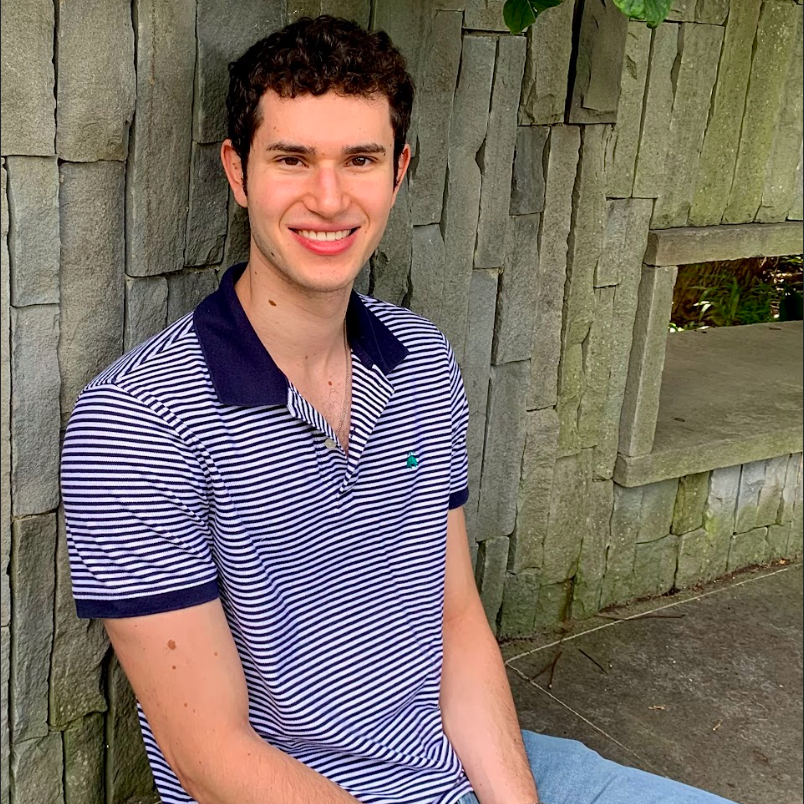
Jared is a first-year doctoral student in the Clinical Psychology program at The New School for Social Research, where he previously completed his MA under the mentorship of Dr. Wendy D’Andrea. His research focuses on trauma, dissociation, and self-referential processing, with an emphasis on integrating psychophysiological and neuroimaging methods to gain insight into how traumatic histories shape internal experience. Jared serves as the lab’s data manager, where he leads the consolidation and analysis of several large multi-study datasets in the D’Andrea Lab, including autonomic, self-report, and fMRI projects. Clinically, he currently trains at the Safran Center and previously worked at LSA Recovery, providing psychodynamic and harm-reduction–oriented care to individuals navigating substance use. He is a Prize Fellow committed to help build a scientific community in which academic scholars are encouraged to share information with practitioners across disciplines and with the greater public in ways that are open and accessible.
Outside the Lab
Jared enjoys experimenting with new cooking techniques, struggling to complete the latest crossword, and rewatching some of his favorite psychological thrillers ex, Mulholland Drive.
Current Projects
Skin Conductance Non-Response: As lab manager, I have consolidated data from ten dissertations conducted by former lab members, which includes data points across demographic information (e.g., age, sex/gender identity, sexual orientation, race), clinical diagnoses endorsed (e.g., depression, anxiety problems, substance use disorders), trauma measures (e.g., childhood trauma questionnaire [CTQ], trauma history questionnaire [THQ]), symptom scales (the PTSD Checklist for DSM-5 [PCL-5], the Dissociative Experiences Scale [DES]), and baseline physiology measures (e.g., heart rate variability [HRV], skin conductance level [SCL]). Equipped with this unified meta-dataset that amalgamates these psychological and physiological variables across over a thousand participants, we have investigated whether the psychological phenomenon of “shutting down” that underlies clinical dissociation may be mirrored by a similar blunting of autonomic SCL activity. We have hypothesized that participants endorsing clinical levels of dissociative symptoms will be less likely to show usable SCL than non-dissociative participants, and that this association will not be accounted for by the self-reported race of the participants. This work was presented at the 36th Annual Boston International Trauma Conference in May 2025
Dissociation in the Scanner: Leveraging a comprehensive fMRI database that Dr. D’Andrea, alongside co-PI Dr. Greg Siegle at the University of Pittsburgh, collected over the span of eight years. This rich dataset provides an opportunity to explore the neural underpinnings of dissociation, a condition where trauma-affected individuals exhibit blunted reactions to emotional stimuli. In my detailed examination of scan day notes for each participant within the dataset, we aimed to identify those who may have experienced a dissociative episode during their fMRI scan (e.g., several instances where participants reported an inability to hear audio of criticisms directed at them during scanning). While emerging research has begun to explore neurobiological markers of blunted affect that correlate with dissociation, such as decreased amygdala activity in response to low-level affective cues in adults with histories of chronic childhood abuse, this endeavor stands at the forefront of uncovering a neural signature for dissociation as it occurs during imaging — a breakthrough not yet achieved in the field.
Publications
Yates, T. S., Fel, J. T., Choi, D., Trach, J. E., Behm, L., Ellis, C. T., & Turk-Browne, N. B. (2025). Hippocampal encoding of memories in human infants. Science, 387(6740), 1316-1320. https://doi.org/10.1126/science.adt7570
Fel, J. T., Ellis, C. T., & Turk-Browne, N. B. (2023). Automated and manual segmentation of the hippocampus in human infants. Developmental Cognitive Neuroscience, 60, 101203. https://doi.org/10.1016/j.dcn.2023.101203
Krohner, S., Siegle, G. J., Fel, J. T., Nieves, N., Herzog, S., Collier, A., Pyzewski, M., Caligiuri, S., Stafford, E., Kraynak, T., Cao, T., Khedari, V., DePierro, J. M., Milbert, M., Feldmiller, J., Feingold, M., Min, M., Shutt, L., Doukas, A., Minshew, R., Freed, S., Gerber, A., & D’Andrea, W. (in prep). Self-referential processing in individuals with psychopathology: The distinctive role of childhood trauma
Presentations
Fel, J. T., Healy, C.J., & D’Andrea, W. (2024, December). Preliminary results: Assessing physiological usability across a clinically dissociative sample. PowerPoint and talk presented at Trauma & Affective Psychophysiology Lab Meeting (The New School).
Herzog, S., Fel, J. T., & D’Andrea, W. (2024, March). A Multi-Method Examination of Altered Threat Responding in Adults with Childhood Polyvictimization. Poster presented at the Society for Affective Science.